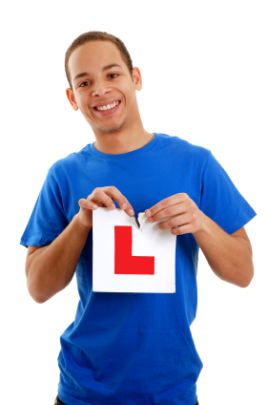
Driving Test and Independent Driving
Independent driving - where the candidate is not following the directions given at each stage by the instructor but rather following a route, e.g. following road signs to Town X until the instructor tells them - is going to form part of the driving test from October 2010 in Great Britain.
The candidate will be required to drive for around 10 minutes, and during that time they will have directions to follow, or traffic signs, or a combination of the two. They may get shown a diagram too.
Newspapers have claimed this is going to lead to a further lowering of the pass rate in the practical test, but the DSA says on its website that this claim was based on early research and not on the final design of this element in the test.
There is more information on this story on the DSA website here:
http://dsa.gov.uk/News.asp?id=SXD005-A7835A58
Related Articles...
Typical brake faults outlined
The brakes are a mechanical object and so it is possible that they will develop problems and not function the way that they should be. This is clearly very dangerous because brakes are one of the...
Driving Theory Test
Until relatively recently in driving history, there was no theory test. From the time the first person passed a driving test in the UK in 1935 through to 1996, there was no separate theory test. ...
Using emergency telephones
There are emergency telephones along motorways. There are telephones that occur roughly once per mile along the motorway which are connected to the emergency services.
There are also blue and...
What to expect at a hazard perception test
The test has fourteen different clips, as outlined in the article entitled 'how to pass the hazard perception test'.
Each of those clips starts counting down from ten to zero, in order to...
Online Driving Theory
Why use an online driving theory website when there are also some books in publication that will help you study for your theory test? Well, there are several advantages to online driving theory,...
What are driving offences
Driving offences are what happens when you do not meet your obligations as a road user.
This could be something like not having the correct documentation that you require or something much...
Nervous Driver Tips
Many people who learn to drive have a combination of nerves and excitement. Even if someone says they have no nerves and are perfectly confident when it comes to driving, the first time you get...
What causes accidents: junctions
An alarmingly high proportion of accidents happen in and around junctions.
This is because of the combination of busy roads, traffic that can be nose to tail and people crossing all sorts of...
Risks when driving: bright or low sun
When the sun is low and bright, it can be very hard indeed to drive. This is because we may have to squint and the bright light can make it hard to pick out objects and to see, sometimes right in...
Some common engine faults
It is beyond the scope of the articles here to go into detail about how the engine works and what the various parts of it are. For the theory test you won't need to know a great detail about the...
Back to home page of driving theory test questions